<?xml version="1.0" encoding="utf-8"?><feed xmlns="http://www.w3.org/2005/Atom" ><generator uri="https://jekyllrb.com/" version="4.2.2">Jekyll</generator><link href="https://thezoltanszabo.com/feed.xml" rel="self" type="application/atom+xml" /><link href="https://thezoltanszabo.com/" rel="alternate" type="text/html" /><updated>2026-06-26T07:00:43+00:00</updated><id>https://thezoltanszabo.com/feed.xml</id><title type="html">Zoltan Szabo’s Blog</title><subtitle>The personal blog of Zoltan Szabo — writing on technology, work, and whatever else is on my mind.</subtitle><author><name>Zoltan Szabo</name></author><entry><title type="html">The Forever Layoff Is Here, and AI Helps Keep It Going</title><link href="https://thezoltanszabo.com/2026/06/26/forever-layoff-era.html" rel="alternate" type="text/html" title="The Forever Layoff Is Here, and AI Helps Keep It Going" /><published>2026-06-26T07:00:19+00:00</published><updated>2026-06-26T07:00:19+00:00</updated><id>https://thezoltanszabo.com/2026/06/26/forever-layoff-era</id><content type="html" xml:base="https://thezoltanszabo.com/2026/06/26/forever-layoff-era.html"><![CDATA[<p>Remember when layoffs arrived like sudden storms, ugly but rare? Now, they feel more like the predictable weather you check every morning.</p>

<p>The forever layoff is defined as a persistent, cyclical strategy where companies conduct frequent, small-scale job reductions rather than a single massive event. Because of this constant restructuring, the forever layoff has become a normalized feature of the modern workplace, leaving employees perpetually waiting for the next email with a growing sense of job insecurity. Add AI spending, weak hiring, and leadership teams aggressively chasing efficiency to the mix, and these cuts stop looking like a temporary reset. Instead, they appear to be a permanent management habit.</p>

<p>You can see this shift unfolding across various professional sectors, including media, consulting, and the tech industry, which once sold stability as part of the deal for white-collar ranks.</p>

<h2 id="key-takeaways">Key Takeaways</h2>

<ul>
  <li>The Shift to Rolling Layoffs: The workplace is moving away from occasional, large-scale reductions toward a cycle of frequent, smaller, and targeted cuts that keep employees in a state of perpetual instability.</li>
  <li>The AI Justification: Executives are increasingly using AI and efficiency initiatives as a narrative to justify ongoing, incremental headcount reductions rather than one-time organizational resets.</li>
  <li>Erosion of Trust and Culture: Constant job insecurity destroys worker morale, fosters defensive behavior, and creates a disconnect between leadership and staff that hinders innovation and risk-taking.</li>
  <li>Redefining Career Security: In the era of the forever layoff, traditional tenure has lost its value. To address the decline in job security, employees must focus on individual marketability, continuous networking, and updating their resume with a diversified skill set to remain resilient.</li>
</ul>

<h2 id="what-the-forever-layoff-really-is">What the forever layoff really is</h2>

<p>The forever layoff is simple. Companies are not always slashing thousands of jobs in one headline grabbing move. More often, they are cutting dozens here, a few dozen there, then doing it again next quarter. This shift from the occasional mass layoff to a cycle of rolling layoffs and micro firings has redefined the modern workplace.</p>

<p>According to Daniel Zhao, lead economist at Glassdoor, the data behind this shift is telling. Smaller reductions, or those affecting fewer than 50 people, now make up 51% of WARN Act notices, up from 38% a decade ago. By intentionally keeping job cuts beneath the reporting thresholds required by the WARN Act, companies often bypass the legal and public scrutiny associated with a traditional mass layoff. While this data focuses on the US, the trend of recurring job cuts is increasingly visible in international tech hubs, marking a truly global phenomenon. These strategies sometimes create environments of constructive dismissal, where the mounting pressure and instability encourage employees to resign voluntarily, effectively allowing the firm to avoid paying severance pay. The cuts are smaller, but the fear remains constant.</p>

<p><img src="https://user-images.rightblogger.com/ai/44acb298-4bee-4289-bccd-29dd1b74e8b3/corporate-corridor-layoff-anxiety-106f6096.jpg" alt="A lone figure stands centered in a long, repetitive office hallway with cool blue tones. The dim lighting and repeating doorways emphasize the feeling of isolation and constant professional uncertainty." />### Why smaller layoffs can still hurt just as much</p>

<p>On paper, small cuts can look disciplined. In real offices, they feel like a fire alarm that never stops chirping. The impact manifests in several ways:</p>

<ul>
  <li>Each round of cuts breaks institutional knowledge as key staff members vanish without warning.</li>
  <li>Remaining employees inherit extra responsibilities, leading to burnout and constant anxiety about whether the team chart will change again.</li>
  <li>The psychological strain of ongoing uncertainty eats away at trust faster than a single, large event.</li>
  <li>Repeated smaller cuts signal to the workforce that leadership lacks a clear, long-term direction.</li>
</ul>

<h3 id="how-frequent-cuts-changed-employee-expectations">How frequent cuts changed employee expectations</h3>

<p>Workers have adapted, but not in a good way. Many now assume instability is normal, even in profitable companies.</p>

<p>That changes behavior. People save more cash, keep their resumes warm, and stop attaching their identity to one employer. Loyalty turns into caution. Career planning turns short-term. If a company says that they are done restructuring, fewer people believe it.</p>

<blockquote>
  <p>When layoffs become routine, workers stop hearing strategy and start hearing threat.</p>
</blockquote>

<h2 id="how-ai-helped-turn-job-cuts-into-a-permanent-cycle">How AI helped turn job cuts into a permanent cycle</h2>

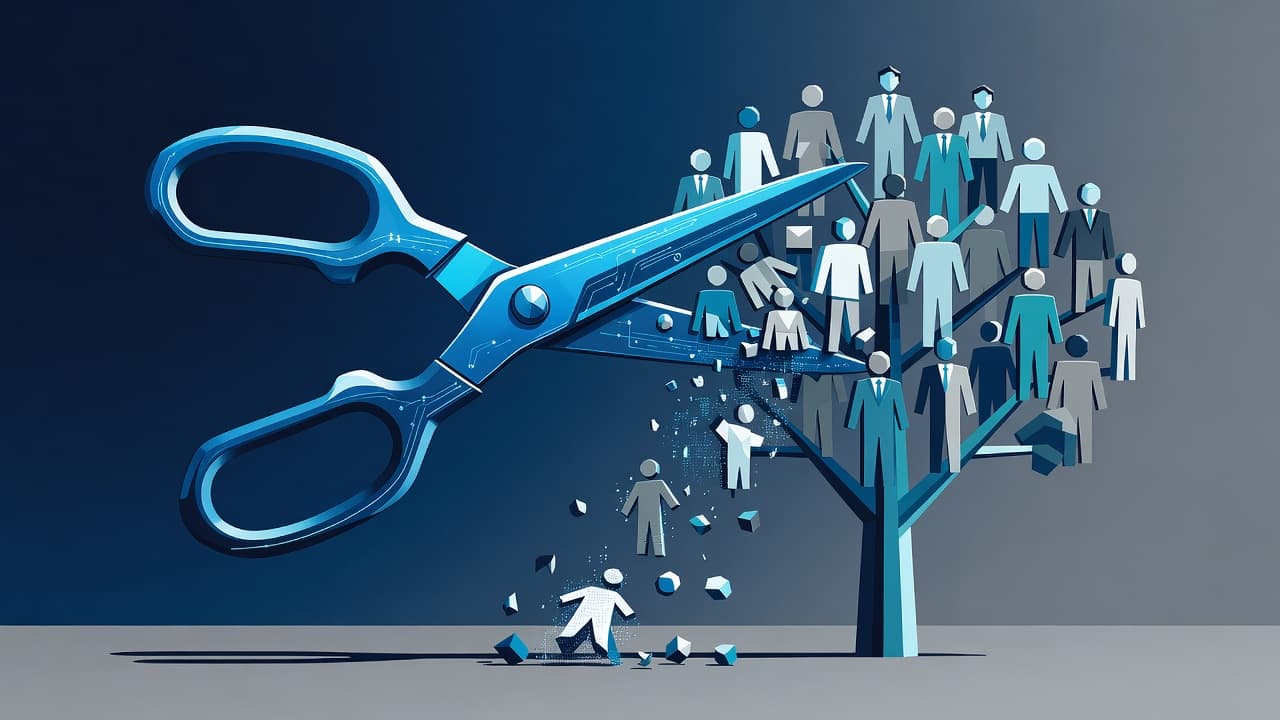
<p>AI did not invent layoffs. It did, however, provide executives with a convenient narrative for making them. By accelerating automation, AI has become the primary driver behind the ongoing erosion of job security.</p>

<p>The logic is easy to sell upstairs. New tools can drive automation across research, coding, support, analysis, and content work. If output per employee goes up, why keep headcount flat? Why backfill open roles? Why not trim now and re-evaluate later?</p>

<p><img src="https://user-images.rightblogger.com/ai/44acb298-4bee-4289-bccd-29dd1b74e8b3/corporate-workforce-pruning-illustration-675a4b62.jpg" alt="Digital metallic shears trim a stylized tree composed of tiny human figures in a clean illustration. Sharp blue and grey lines create a tense, geometric composition representing systematic staff reduction." />### The business case leaders use to cut staff</p>

<p>Most leaders do not say that AI will replace everyone. They say something softer and more believable. AI can reduce repetitive work, speed up delivery, and lower labor costs. That becomes permission to run leaner teams for longer.</p>

<p>In theory, that sounds measured. In practice, it can turn every budget cycle into a staffing review. A company does not need to announce a giant AI overhaul to implement job cuts. It can freeze hiring, remove some contractors, then cut a small team after a process redesign. Three months later, it can do the same thing elsewhere, leading to recurring job cuts that disrupt stability.</p>

<p>These patterns often start in the tech industry, which frequently serves as a leading indicator for broader market shifts. This reflects an emerging K-shaped economy. While high-level strategic roles may see growth, middle-management positions often face the brunt of these changes. When the corporate plan is fuzzy, staff reductions become the clearest action on the table.</p>

<p>BCG made a similar point in its view that <a href="https://www.bcg.com/publications/2026/ai-will-reshape-more-jobs-than-it-replaces">AI will reshape more jobs than it replaces</a>. The catch is timing. Reshaped jobs arrive later, but cost cuts happen now.</p>

<h3 id="why-ai-often-changes-jobs-faster-than-it-creates-them">Why AI often changes jobs faster than it creates them</h3>

<p>This is where workers feel the gap. A task disappears before a new role appears. A team gets new AI tools before it gets training. A manager promises higher-value work without showing where it is.</p>

<p>That does not mean AI has no upside. Research from <a href="https://www.anthropic.com/research/labor-market-impacts">Anthropic on labor market impacts</a> suggests the effect will vary by task, role, and timing. However, full-time workers do not live in a long-run model; they live in this quarter’s org chart.</p>

<p>So the lived experience is blunt. People see pieces of their job automated first. They do not yet see a stable path into the work that comes next, creating a disconnect between technological progress and the long-term career security of the workforce.</p>

<h2 id="what-workers-are-feeling-inside-the-forever-layoff-era">What workers are feeling inside the forever layoff era</h2>

<p>The emotional cost is not limited to the people who leave. The survivors often carry the heaviest burden, as worker anxiety becomes a fixture of the daily grind.</p>

<p>Recent workplace reviews point to a steady drop in confidence in senior management since the pandemic peak. Mentions of disconnect, miscommunication, distrust, and misalignment are all up, with misalignment jumping the most. The hardest-hit sectors include tech, media, management, and consulting.</p>

<p><img src="https://user-images.rightblogger.com/ai/44acb298-4bee-4289-bccd-29dd1b74e8b3/corporate-burnout-silhouette-a7986b8e.jpg" alt="A slumped human figure sits at a desk amidst floating, abstract geometric shapes representing digital clutter. The composition uses a cold, oppressive color palette to emphasize a sense of professional isolation." />### The rise of distrust, misalignment, and burnout</p>

<p>It is hard to trust leaders who keep saying the business is healthy while another round of job cuts lands two weeks later.</p>

<p>That gap between corporate messaging and reality wears down worker morale. Internal town halls start sounding rehearsed. Words like focus and efficiency stop sounding strategic. They start sounding like warning labels.</p>

<p>Repeated layoffs also scramble the story a company tells itself. Teams are asked to move faster after losing key people. AI pilots are launched in the middle of budget pressure. Managers are told to motivate employees who have already stopped believing promises about stability or growth.</p>

<h3 id="why-the-people-who-stay-often-struggle-the-most">Why the people who stay often struggle the most</h3>

<p>There is a name for it, survivor guilt, but the daily version looks more ordinary. It involves more meetings, more work, less patience, and more second guessing.</p>

<p>The problem is not only stress. It is caution. People who think they may be next do not take as many creative risks. They avoid disagreement and protect their turf. They stop volunteering for the half built idea that might fail.</p>

<p>This defensive posture is toxic to corporate culture, and it is bad for AI adoption too. New tools work best in teams willing to experiment, but an atmosphere defined by fear pushes people in the opposite direction.</p>

<h2 id="the-hidden-trade-offs-behind-remote-work-returns-to-office-and-early-career-pay">The hidden trade-offs behind remote work, returns to office, and early career pay</h2>

<p>Layoffs are not happening in isolation. They are colliding with the slow return to office and a job market that gives workers less room to negotiate. While the economy continues to fluctuate in a rolling recession, the impact remains uneven across different sectors and regions.</p>

<p>Remote and hybrid staff still report better work-life balance than office-first peers. But the career picture has weakened. Glassdoor data shows career opportunity ratings for remote and hybrid workers sliding from 4.1 in 2020 to 3.5 in 2025.</p>

<h3 id="why-flexibility-now-comes-with-career-pressure">Why flexibility now comes with career pressure</h3>

<p>That is the quiet bargain many full-time workers feel pushed into. You can choose to keep your flexibility, but you risk slower advancement. For some, return to office mandates feel like a form of constructive dismissal, forcing employees to choose between their personal lives and their roles. Alternatively, you can show up more often and hope to improve your odds of recognition.</p>

<p>This is not true everywhere, but it is common enough to shape behavior. In a softer job market, fewer people feel able to hold the line. If you are already worried about job security, you may not want to add less visible to your list of concerns.</p>

<p>The forever layoff makes that trade-off harsher. When headcount feels fragile, proximity starts to matter more. It is not necessarily because office presence proves value, but because uncertain managers often reward the people they see most frequently.</p>

<h3 id="what-a-weak-hiring-market-means-for-new-grads-and-job-seekers">What a weak hiring market means for new grads and job seekers</h3>

<p>The current job market is tougher for people trying to move. Hiring has fallen to a 10-year low in many areas, and offer decline rates dropped 12 percent from 2023 to 2025. That tells you something simple: people are accepting jobs they might once have passed on.</p>

<p>There is one bright spot. Early-career pay has finally moved above 2020 levels in some emerging US cities. But higher starting pay does not cancel out weak demand. If openings are scarce, a better wage on paper still comes with less choice, slower mobility, and often the removal of generous severance pay clauses in new contracts.</p>

<p>That tension shows up in bigger labor forecasts too. <a href="https://www.goldmansachs.com/insights/articles/how-will-ai-affect-the-us-labor-market">Goldman Sachs research on AI and the US labor market</a> points to major long-term change, but long-term does not help a graduate who needs a foothold this year.</p>

<h3 id="how-to-protect-your-career-in-the-forever-layoff-era">How to protect your career in the forever layoff era</h3>

<p>In this climate, true job security is no longer something granted by a company through tenure or loyalty. Instead, it has become an individual responsibility. To protect your career, consider the following strategies:</p>

<ul>
  <li>Prioritize constant networking outside of your current firm. Building a professional circle that exists independently of your employer provides a vital safety net if your position is eliminated.</li>
  <li>Keep your resume updated with specific AI-related accomplishments. Showing that you understand how to leverage new technologies makes you a more attractive candidate in a crowded field.</li>
  <li>Focus on diversifying your skill sets. The more versatile you are, the easier it becomes to pivot if your specific role or industry faces a downturn.</li>
</ul>

<h2 id="frequently-asked-questions">Frequently Asked Questions</h2>

<h3 id="how-is-a-forever-layoff-different-from-traditional-job-cuts">How is a ‘forever layoff’ different from traditional job cuts?</h3>

<p>A traditional layoff is typically a single, large-scale event triggered by a major economic crisis or structural shift. In contrast, the forever layoff is a cycle of small, frequent, and rolling staff reductions that keeps a workforce in a constant state of uncertainty rather than allowing for a clean reset.</p>

<h3 id="why-are-companies-choosing-smaller-recurring-layoffs-over-one-big-event">Why are companies choosing smaller, recurring layoffs over one big event?</h3>

<p>Smaller layoffs often allow companies to bypass the legal and public scrutiny triggered by WARN Act thresholds, which require reporting when massive numbers of employees are let go at once. Additionally, frequent, incremental cuts allow management to perpetually lower labor costs while keeping the workforce in a defensive, compliant state.</p>

<h3 id="does-ai-actually-justify-these-ongoing-staffing-reductions">Does AI actually justify these ongoing staffing reductions?</h3>

<p>While AI can automate specific tasks and increase output, many firms use it as a convenient narrative to justify permanent headcount reductions. By framing constant trimming as an ‘efficiency initiative,’ leadership can avoid hiring back staff even as the company remains profitable, effectively making job cuts a standard part of the operational budget cycle.</p>]]></content><author><name>Zoltan Szabo</name></author><summary type="html"><![CDATA[The forever layoff is here, small recurring cuts, AI spending, and weak hiring keep workers waiting for the next email and rethinking job security.]]></summary></entry><entry><title type="html">Why the Five Eyes Are Briefing CEOs, Not Just CISOs</title><link href="https://thezoltanszabo.com/2026/06/25/five-eyes-ceo-cyber-risk.html" rel="alternate" type="text/html" title="Why the Five Eyes Are Briefing CEOs, Not Just CISOs" /><published>2026-06-25T07:00:20+00:00</published><updated>2026-06-25T07:00:20+00:00</updated><id>https://thezoltanszabo.com/2026/06/25/five-eyes-ceo-cyber-risk</id><content type="html" xml:base="https://thezoltanszabo.com/2026/06/25/five-eyes-ceo-cyber-risk.html"><![CDATA[<p>A quiet line has been crossed in cyber security. The Five Eyes are talking to CEOs because the person who owns budget, risk appetite, and crisis calls can no longer treat cyber as a specialist problem.</p>

<p>That doesn’t shrink the CISO’s role. It raises it, and it puts the CEO on the hook. AI has made attacks faster, cheaper, and harder to stop, so cyber resilience now sits next to revenue, operations, and trust.</p>

<h2 id="cyber-risk-is-no-longer-just-an-it-problem">Cyber risk is no longer just an IT problem</h2>

<p>When a breach freezes billing or knocks a supplier portal offline, nobody cares which team “owned” the system. They care that orders stopped, customers can’t log in, and the market is asking questions. A cyber incident can now hit cash flow, service levels, legal exposure, and brand trust in one move.</p>

<blockquote>
  <p>Security failures become business failures the minute the company can’t sell, ship, pay, or communicate.</p>
</blockquote>

<h3 id="what-changed-when-ai-entered-the-threat-picture">What changed when AI entered the threat picture</h3>

<p>AI speeds up the boring parts of an attack. It helps find weak spots, write better phishing messages, sort stolen data, and test ways in. That shortens the gap between discovery and exploitation.</p>

<p>The warning from the Five Eyes is blunt. Frontier AI models will change offense and defense faster than most planning cycles expect. Old assumptions can go stale in months, not years. That matters when a slow patch cycle or an exposed legacy system gives an attacker a head start.</p>

<h3 id="why-this-risk-now-belongs-on-the-ceo-agenda">Why this risk now belongs on the CEO agenda</h3>

<p>Only the CEO can line up business priorities when security competes with growth, speed, and cost. Only the CEO can force operations, product, legal, HR, procurement, and IT to act as one company.</p>

<p>That’s why cyber resilience belongs in the same conversation as business continuity and investor confidence. The CISO can diagnose the risk. The CEO decides how much risk the company will carry, and what gets funded now.</p>

<h2 id="why-the-five-eyes-are-speaking-directly-to-ceos">Why the Five Eyes are speaking directly to CEOs</h2>

<p>This isn’t a snub to security teams. It’s a demand for leadership accountability. In their <a href="https://www.cyber.gov.au/about-us/view-all-content/news/five-eyes-cyber-security-agencies-statement">Five Eyes cyber agencies statement</a>, the US, UK, Canada, Australia, and New Zealand agencies made a simple point. Boards and executives need controls that work under pressure, not paper programs that look tidy until the first real incident.</p>

<p><img src="https://user-images.rightblogger.com/ai/44acb298-4bee-4289-bccd-29dd1b74e8b3/executive-cyber-security-briefing-94af18eb.jpg" alt="A focused executive views a digital tablet while sitting at a sleek boardroom table. Subtle, glowing abstract lines weave through the dimly lit office space to represent sophisticated digital data security." />### The CEO controls the levers the CISO does not</p>
<p>A CISO can recommend faster patching, fewer exposed systems, stronger identity controls, and better vendor terms. The CEO can approve the spend, accept the short-term friction, and tell the business that old habits are over.</p>

<p>A firewall doesn’t retire a factory system. A CISO doesn’t cancel a risky vendor renewal. The CEO can. Those trade-offs sit above the security team, because they affect money, deadlines, and operating choices across the company.</p>

<h3 id="security-teams-need-executive-backing-to-be-effective">Security teams need executive backing to be effective</h3>

<p>Most security failures are not caused by a missing slide deck. They’re caused by delay, exceptions, and weak follow-through. A control that exists in policy but fails in a live incident is not much of a control.</p>

<p>Boards and executives need to know whether the company can detect, contain, and recover under stress. That means testing. It also means giving the security leader enough authority to say no before a small weakness turns into a business outage.</p>

<h3 id="the-message-is-meant-to-change-behavior-not-blame">The message is meant to change behavior, not blame</h3>

<p>The Five Eyes are not saying the CISO failed. They’re saying the old division of labor is too small for the risk. Cyber defense only works when the top team acts early, funds the basics, and keeps paying attention after the headline fades.</p>

<h2 id="what-ceos-need-to-do-differently-right-now">What CEOs need to do differently right now</h2>

<p>The first job is to ask better questions. Not “Are we secure?” but questions that expose weak ownership and slow recovery.</p>

<ul>
  <li>Which systems must stay up for us to bill, ship, serve, and pay people?</li>
  <li>How quickly can we isolate a compromised vendor or identity provider?</li>
  <li>Who can decide to shut off access, pause a rollout, or take a service offline?</li>
  <li>When did we last test recovery with the people who would run it?</li>
</ul>

<p>If the answers are vague, the problem isn’t technical. It’s managerial.</p>

<h3 id="treat-secure-by-design-and-secure-by-default-as-the-standard">Treat secure-by-design and secure-by-default as the standard</h3>

<p>Security can’t be bolted on after the contract is signed or the product ships. It has to show up in architecture, vendor selection, access rights, and change approval. Defense in depth still matters. So do multi-factor authentication, tight permissions, fewer internet-facing assets, and faster patching.</p>

<p>The <a href="https://www.csoonline.com/article/4188049/change-your-cyber-risk-strategy-to-meet-ai-threats-five-eyes-countries-warn-csos.html">Five Eyes warning to security leaders</a> made the point plainly: unsupported systems and slow updates are now strategic liabilities. If a system does not need outside exposure, close it off. If a platform can’t be secured, plan its exit.</p>

<h3 id="prepare-for-breaches-as-if-they-will-happen">Prepare for breaches as if they will happen</h3>

<p>Breaches will happen. New zero-day flaws will show up. Third parties will fail. The goal is not perfection. The goal is fast containment and clean recovery before a security event becomes a full business crisis.</p>

<p>Run exercises with real decision-makers. Practice who speaks, who approves, who disconnects, and who restores. Train teams for the messy middle, not the perfect script.</p>

<h2 id="how-ceos-and-cisos-can-work-together-better">How CEOs and CISOs can work together better</h2>

<p>This is not a power struggle. It’s a partnership with clear roles. The CEO sets risk appetite, breaks deadlocks, and funds the hard work. The CISO translates threats into action and tells the truth when the answer is “not ready.”</p>

<h3 id="give-the-ciso-authority-resources-and-direct-access">Give the CISO authority, resources, and direct access</h3>

<p>A security leader can’t carry responsibility without the power to act. The role should sit close to strategy, not buried three layers down inside IT. Direct access to the CEO and board changes speed, clarity, and follow-through.</p>

<h3 id="use-security-language-the-business-can-understand">Use security language the business can understand</h3>

<p>Technical severity scores rarely move a board. Downtime, lost orders, customer churn, regulatory cost, and reputation damage do. The better the CISO translates risk into business terms, the faster the CEO can make the right call.</p>

<h3 id="use-ai-to-strengthen-defense-not-just-improve-efficiency">Use AI to strengthen defense, not just improve efficiency</h3>

<p>Attackers are already using AI. Defenders should do the same, but with discipline. AI can help spot weak code earlier, flag odd behavior faster, and shorten response time. Still, tools don’t save companies that ignore basics. Clean identity data, sound architecture, tested recovery, and executive backing do.</p>

<h2 id="leadership-now-sits-inside-cyber-defense">Leadership now sits inside cyber defense</h2>

<p>This shift is not about sidelining the CISO. It’s about putting <strong>cyber resilience</strong> where company-wide decisions are made. When attack windows shrink from years to months, the leader who can move budget, vendors, operations, and crisis authority has to be in the room.</p>

<p>The Five Eyes are talking to CEOs because CEOs can change a company’s risk posture fast enough to matter. The companies that act now will cut exposure, protect trust, and stay steadier when the next attack lands.</p>]]></content><author><name>Zoltan Szabo</name></author><summary type="html"><![CDATA[Five Eyes are warning CEOs: cyber risk is now a business problem. AI speeds up attacks, and CEOs must back CISOs with authority, budget, and action.]]></summary></entry><entry><title type="html">Moravec’s Paradox Is Your AI BS Filter</title><link href="https://thezoltanszabo.com/2026/06/24/moravecs-paradox-ai-hype.html" rel="alternate" type="text/html" title="Moravec’s Paradox Is Your AI BS Filter" /><published>2026-06-24T07:00:19+00:00</published><updated>2026-06-24T07:00:19+00:00</updated><id>https://thezoltanszabo.com/2026/06/24/moravecs-paradox-ai-hype</id><content type="html" xml:base="https://thezoltanszabo.com/2026/06/24/moravecs-paradox-ai-hype.html"><![CDATA[<p>Moravec’s paradox states that high-level reasoning requires very little computation, while low-level sensorimotor skills require enormous computational resources. This is why artificial intelligence can draft a complex board memo and still fall apart on a task a teenager can do without thinking.</p>

<p>If you want to cut through the current marketing noise, Moravec’s paradox is one of the best filters around. It explains why machines can look brilliant in narrow, abstract work but remain oddly clumsy in messy, real-world situations. This distinction is vital when you are buying software, redesigning workflows, or evaluating claims that a chatbot is on the verge of AGI or ready to replace half of your team.</p>

<p>The most useful question is not “Is this AI smart?” Instead, you should be asking, “Smart at what?”</p>

<h2 id="what-moravecs-paradox-means-in-plain-english">What Moravec’s paradox means in plain English</h2>

<p>In plain English, Moravec’s paradox says this: computers often handle tasks humans find mentally hard, but struggle with tasks humans do almost on autopilot. Think algebra, not shoelaces. Think checkers and chess, not crossing a crowded kitchen without bumping into anything.</p>

<p>That sounds backwards until you stop equating what feels easy with what is simple. A child can recognize a face in bad light, pick up a cup, and adjust their grip without a rulebook. A machine still has to work incredibly hard for that. This concept was identified in the 1980s by researchers Hans Moravec, Marvin Minsky, and Rodney Brooks, who noticed that while symbolic reasoning is easy to program, the physical world remains a challenge.</p>

<h3 id="why-checkers-and-chess-are-easier-for-machines-than-walking-and-seeing">Why checkers and chess are easier for machines than walking and seeing</h3>

<p>Checkers and chess are full of rules, symbols, and clean states. So is math, and so are many business tasks that live inside forms, fields, and formal logic. A machine can search options fast and follow clear instructions all day. However, these systems often fail at basic perception and mobility.</p>

<p>Walking through a room is nothing like a game of chess. The floor might be wet, the dog might be asleep in the wrong place, or the mug you want might be half-hidden behind a bowl. Those are tiny judgment calls, but there are thousands of them. A good <a href="https://lhra.io/blog/ai-concepts-moravecs-paradox-care/">plain-English overview of Moravec’s paradox</a> confirms that what feels automatic to us is actually the hard part for machines because it requires vast amounts of sensorimotor knowledge.</p>

<h3 id="the-evolution-piece-that-makes-the-paradox-make-sense">The evolution piece that makes the paradox make sense</h3>

<p>The reason for this gap lies in human evolution. Balance, depth perception, hand control, facial recognition, and social reading were tuned over millions of years by natural selection. Your brain has a massive amount of dedicated machinery for those jobs, and most of it runs in the background.</p>

<p>Abstract math is much newer, writing is new, and formal logic is new. We had less time to turn those skills into instinct, so they still feel effortful to us. For computers, that setup flips. Rules are easier to encode than bodies, senses, and the everyday common sense that our ancestors spent eons perfecting.</p>

<h2 id="how-moravecs-paradox-helps-you-see-through-ai-hype">How Moravec’s paradox helps you see through AI hype</h2>

<p>Most AI marketing bets on one simple confusion: people see a polished output and assume a reliable capability. Moravec’s paradox tells you not to make that leap.</p>

<p>It pushes you to ask where the task lives. Is it clean, narrow, and mostly symbolic? Or messy, physical, and full of exceptions? That split explains a lot of the gap between flashy demos and useful products. By attempting to reverse engineering human intuition, modern machine learning often hits a wall when faced with the chaotic reality of unstructured work.</p>

<h3 id="the-tasks-ai-can-fake-fast-and-the-ones-it-still-cant-do-well">The tasks AI can fake fast, and the ones it still can’t do well</h3>

<p>AI is often good at drafting emails, summarizing meetings, sorting documents, extracting fields from stable forms, and matching patterns across large text sets. Reimbursement coding, ticket routing, slide cleanup, and first-pass contract review are attractive use cases for the same reason. The inputs are legible, and the outputs are easier to check.</p>

<p>It still struggles when timing, touch, context, or physical reality matter. This is particularly visible in the latest generation of computer-use agents and GUI agents. These tools look impressive in curated videos, but they frequently fail when navigating software interfaces that contain unexpected pop-ups, lag, or non-standard layouts. Packing a suitcase without crushing anything or understanding that “ship it today” means something different when inventory is stuck in customs are not exotic problems. They are normal work.</p>

<h3 id="why-a-smart-demo-can-still-hide-a-weak-product">Why a smart demo can still hide a weak product</h3>

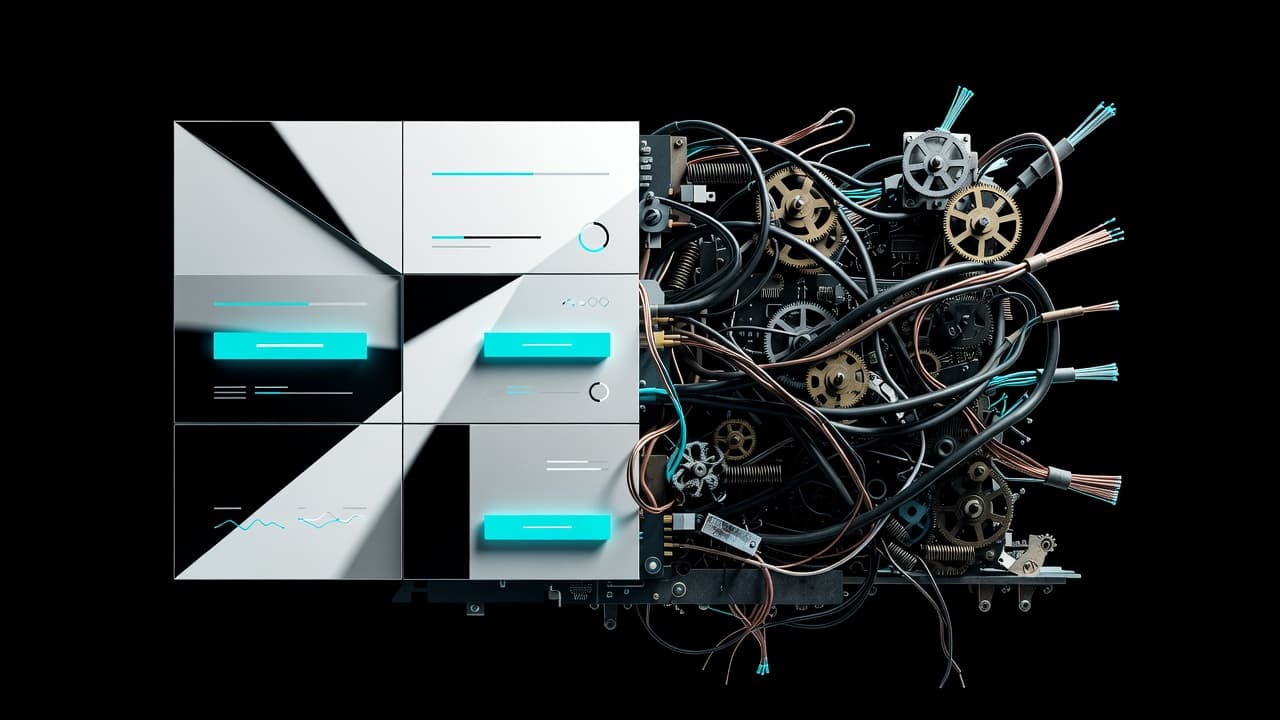
<p>A demo can be true and still be misleading. Give an AI clean data, a friendly prompt, a fixed process, and a human ready to rescue it, and it may look amazing. Benchmarks can do the same trick. So can a single lucky output.</p>

<p><img src="https://user-images.rightblogger.com/ai/44acb298-4bee-4289-bccd-29dd1b74e8b3/digital-interface-vs-complexity-a1a4a179.jpg" alt="A split illustration displays a sleek, reflective user interface on the left. In stark contrast, the right side reveals a chaotic mechanical interior filled with tangled wires and interlocking metallic gears." />Real work is meaner. People upload the wrong file. They use broken templates. They ask half-formed questions. Systems time out. Policies conflict. Edge cases arrive before lunch. That gap between stage performance and daily productivity sits inside <a href="https://www.forbes.com/sites/anjanasusarla/2026/01/25/a-gap-in-ai-adoption-moravec-and-the-ai-productivity-paradox/">Forbes’ look at Moravec and the AI productivity paradox</a>. If the product only shines inside a controlled script, you are not looking at intelligence. You are looking at staging.</p>

<h3 id="the-questions-that-expose-ai-bs-quickly">The questions that expose AI BS quickly</h3>

<p>You can expose most AI BS in a few minutes. Ask the questions vendors prefer to skip.</p>

<blockquote>
  <p>If nobody can tell you how the system fails, you’re looking at theater.</p>
</blockquote>

<ul>
  <li>What exact task is it solving, not the broad department, the task?</li>
  <li>Are the inputs clean and repeatable, or messy and inconsistent?</li>
  <li>How often does it fail, and how is that measured?</li>
  <li>What happens on exceptions, conflicting data, and weird edge cases?</li>
  <li>Who fixes mistakes, and how much time does that take?</li>
  <li>Does it work inside the real process, with real systems, or only in a sandbox?</li>
  <li>After review and cleanup, is the total work lower?</li>
</ul>

<p>The last question is the one that matters. If humans still do the hard part and clean up the mess, the automation story is weaker than it sounds.</p>

<h2 id="where-the-paradox-shows-up-in-real-life-and-work">Where the paradox shows up in real life and work</h2>

<p>This idea is not academic. It shows up in inboxes, ticket queues, call notes, warehouse scans, CRM fields, travel booking, and customer support. Once you notice it, you start seeing the same pattern everywhere.</p>

<h3 id="ai-is-often-strong-at-text-summaries-and-pattern-matching">AI is often strong at text, summaries, and pattern matching</h3>

<p>Text is the sweet spot because language can be turned into tokens, patterns, and probabilities. AI excels here because models are trained on internet-scale data using reinforcement learning and reward modeling to predict the most likely next step. That makes AI useful for first drafts, summaries, translation, tagging, search, code suggestions, and recurring classification work. In office settings, that is enough to create real value.</p>

<p>Useful does not mean trustworthy. Models can invent facts, flatten important detail, or sound more certain than they should. They can give you a clean summary that misses the only line that mattered. That mismatch is captured well in this <a href="https://www.linkedin.com/posts/christopherwink_i-dont-want-ai-to-make-art-so-i-can-do-laundry-activity-7457410069471621120-WGe5">short take on Moravec’s paradox</a>. AI can do the shiny, smart-looking task and still miss the grounded human one sitting next to it.</p>

<h3 id="the-messy-parts-context-judgment-and-physical-reality">The messy parts, context, judgment, and physical reality</h3>

<p>Now look at the hard stuff. A support agent has to hear frustration, spot risk, remember policy, protect the relationship, and decide when to bend. A nurse reads body language, timing, and the room. A plant operator knows when a noise is normal and when it means trouble.</p>

<p>None of that looks like complex cognitive processes performed by a computer. Instead, it depends on tacit knowledge, memory, sensory input, and judgment under uncertainty. Highway lane-keeping is hard, yet a busy loading dock may be harder because the requirements for visual perception are less formal and the exceptions never stop. Humans handle that with an intuitive, deep understanding of the world. Machines still need narrow setups, strong guardrails, or a person in the loop.</p>

<h3 id="why-enterprise-tools-fail-when-the-process-is-not-clean">Why enterprise tools fail when the process is not clean</h3>

<p>This is where many enterprise AI projects hit the wall. Leaders hope AI will fix a messy process, broken master data, weak ownership, and five competing exceptions. It will not. It usually scales the confusion.</p>

<p>If approvals are unclear, documents are inconsistent, and no one agrees on the right answer, the model has nothing solid to lock onto. The result is not a transformation. It is faster production of inconsistent outputs. AI likes structure, but most organizations have less of it than they think.</p>

<h2 id="a-simple-framework-for-judging-any-ai-claim">A simple framework for judging any AI claim</h2>

<p>You don’t need a PhD to judge an AI claim. You need a simple screen and the discipline to use it.</p>

<h3 id="ask-whether-the-task-is-narrow-or-open-ended">Ask whether the task is narrow or open-ended</h3>

<p>Narrow tasks are better bets. Think invoice field extraction from one template, call summary in a fixed format, or defect detection on a stable production line. The boundaries are clearer, and the error cases are easier to define.</p>

<p>Open-ended tasks are where hype grows fast. “Run customer success.” “Replace analysts.” “Manage procurement exceptions.” The more the job depends on taste, trade-offs, politics, or shifting context, the less you should trust the magic show. This is particularly relevant when you consider that while abstract thought is easily digitized in the modern digital economy, physical automation remains a major hurdle.</p>

<h3 id="check-how-much-human-oversight-is-still-needed">Check how much human oversight is still needed</h3>

<p>A lot of good AI works because a person is still checking, correcting, routing, or reframing the output. That is fine. Plenty of tools are worth using even with review. A helper can still save time.</p>

<p><img src="https://user-images.rightblogger.com/ai/44acb298-4bee-4289-bccd-29dd1b74e8b3/human-oversight-tech-judgment-6c2b7fb2.jpg" alt="A person stands before a glowing screen with soft, warm light radiating from their figure. This golden aura contrasts sharply against the cool, blue-toned digital interface displayed in the background." />But be honest about the economics. If the human still does the hard part, the AI is not an autonomous worker. It is a helper with limits. Measure whether review time, rework, and error cost go down. If they do not, the value is not there. You should exercise strict human oversight, especially for tasks that require complex sensorimotor skills, which is the traditional domain of robotics.</p>
<h3 id="watch-for-the-gap-between-usefulness-and-magic">Watch for the gap between usefulness and magic</h3>

<p>This is the last filter, and maybe the most useful one. A tool can be helpful without being revolutionary. Saving 20 minutes on notes is real. Better search across contracts is real. Faster first drafts are real.</p>

<p>You do not need sci-fi claims to get value. Most business gains come from small improvements that repeat every day. The loudest promise is often the weakest one. The best AI tools feel a bit boring, and they are far from the sentient humanoid robots often portrayed in media. These practical tools simply remove friction; they do not pretend to be people.</p>

<h2 id="clear-thinking-beats-ai-hype">Clear thinking beats AI hype</h2>

<p>Moravec’s paradox is a vital reminder that machine intelligence is inherently uneven. Artificial intelligence can be stunningly capable in one lane while remaining completely clueless in the next.</p>

<p>This is exactly why both blind excitement and blanket fear miss the mark. While machines excel at complex logical reasoning, they often fail at the simple, fluid common sense that humans navigate effortlessly. The most effective approach is to objectively evaluate the specific task, the potential failure mode, and the real cost of cleanup.</p>

<p>When you apply this framework, much of the surrounding AI hype stops looking impressive. By using the principles behind Moravec’s paradox to separate genuine utility from technical spectacle, you can focus on the small sliver of automation that is actually useful</p>]]></content><author><name>Zoltan Szabo</name></author><summary type="html"><![CDATA[Moravec's paradox explains why AI can write a board memo yet still botch simple real-world tasks, and how to use that fact to spot AI hype.]]></summary></entry><entry><title type="html">Meta’s AI Revolt: What Zuckerberg Got Wrong</title><link href="https://thezoltanszabo.com/2026/06/23/meta-ai-revolt.html" rel="alternate" type="text/html" title="Meta’s AI Revolt: What Zuckerberg Got Wrong" /><published>2026-06-23T07:00:17+00:00</published><updated>2026-06-23T07:00:17+00:00</updated><id>https://thezoltanszabo.com/2026/06/23/meta-ai-revolt</id><content type="html" xml:base="https://thezoltanszabo.com/2026/06/23/meta-ai-revolt.html"><![CDATA[<p>Following a series of mass layoffs, canceled hiring initiatives, and a sweeping AI reorganization, employees were suddenly shoved into new roles. As a result, morale suffered significantly, and Mark Zuckerberg eventually admitted that Meta had made mistakes. He was certainly correct about that. However, the bigger mistake was more fundamental: a smart strategy can still fail when trust within an organization is weak and major change is delivered as a top-down mandate.</p>

<h2 id="what-sparked-the-revolt-and-damaged-meta-ai-employee-morale">What sparked the revolt and damaged Meta AI employee morale?</h2>

<p>Meta’s AI push was massive, even by Meta’s standards. In March, the company formed an Applied AI division consisting of approximately 6,500 engineers and product managers. Management then began moving these staff members into data labeling and reinforcement learning work, which is the hidden labor required to train AI systems.</p>

<p><img src="https://user-images.rightblogger.com/ai/44acb298-4bee-4289-bccd-29dd1b74e8b3/chaotic-corporate-office-transformation-c547be84.jpg" alt="A flat vector scene depicts office workers as abstract geometric shapes moving in frantic, conflicting directions. Overlapping lines and muted tones create a sense of professional instability within the corporate workspace." />On some core teams, 30% to 50% of engineers experienced an involuntary reassignment. For professionals who believed they were building core products, this move did not feel like a career opportunity. It felt like conscription.</p>
<h3 id="why-surprise-reassignment-emails-created-instant-distrust">Why surprise reassignment emails created instant distrust</h3>

<p>The rollout was executed with little warning and even less context, which caused significant damage to workplace morale. The impact of these notices can be broken down into three key factors:</p>

<ul>
  <li>Lack of warning: Employees learned of their new roles through blunt electronic notices rather than meaningful conversations with leadership.</li>
  <li>Loss of agency: The top-down approach signaled to employees that their individual career goals were secondary and that their professional input was entirely optional.</li>
  <li>The shift to menial tasks: Transitioning skilled engineers into data labeling was viewed as a step down, leading many to feel their expertise was being devalued.</li>
</ul>

<p>A surprise email often does more damage than leaders anticipate. It transforms a business decision into a trust event. When people do not understand the underlying reasons for a change, they fill the gap with their own explanations, which are often far more cynical than the reality.</p>

<h3 id="why-layoffs-and-reorgs-at-this-scale-shook-morale">Why layoffs and reorgs at this scale shook morale</h3>

<p>This transition did not occur under calm conditions. It followed a series of job cuts, scrapped hiring plans, and a sharp pivot in company priorities. Even high-performing teams become rattled when the floor keeps shifting beneath them.</p>

<p>The public version of this story sounded just as difficult, with accounts of job cuts and forced AI reassignments appearing on platforms like Instagram. While Zuckerberg later stated there would be no more company-wide layoffs for the remainder of 2026, the damage to internal culture had already been done.</p>

<h2 id="what-mark-zuckerberg-got-wrong-about-talent-and-loyalty">What Mark Zuckerberg got wrong about talent and loyalty</h2>

<p>Mark Zuckerberg’s biggest mistake was not choosing AI as a priority. Instead, his failure was assuming that smart employees would automatically line up behind the move. Capability and commitment are not the same thing. You can have brilliant people on the payroll and still lose their energy if they feel like cogs in a machine.</p>

<p>That is the management error sitting underneath the whole mess. Zuckerberg seems to have optimized for who could do the work, not who had agreed to own it. When high-level engineers were suddenly assigned soul-crushing work to train AI models, they realized these tasks offered zero potential for career growth.</p>

<h3 id="why-being-chosen-is-not-the-same-as-being-valued">Why being chosen is not the same as being valued</h3>

<p>The disconnect stems from a fundamental difference between how leadership views talent and how talent views itself. Consider the emotional divide:</p>

<ul>
  <li>Being recruited into a mission implies a partnership where your unique skills are sought after to solve complex problems.</li>
  <li>Being drafted into a mission feels like a transactional assignment where you are merely a resource to be deployed.</li>
  <li>When employees view themselves as draftees, the company loses their intrinsic motivation, and the culture begins to erode.</li>
</ul>

<p>If you are picked because you are skilled, that can feel flattering. If you are picked because leadership wants the cheapest smart option in the room, it feels different. It feels transactional.</p>

<blockquote>
  <p>Smart people do not resist because they are weak. They resist because they have agency.</p>
</blockquote>

<h3 id="how-cost-thinking-can-damage-the-message">How cost thinking can damage the message</h3>

<p>Leaders make trade-offs. That is normal. The problem starts when the trade-off becomes the message. Telling people, directly or indirectly, that they were moved because they scored higher than contractors may be efficient logic, but it is terrible human judgment.</p>

<p>Once employees think they are being treated as inputs instead of partners, goodwill disappears fast. By the time stories about <a href="https://www.instagram.com/reel/DZyBdOCkbMl/">workers pushing back against AI tasks</a> started circulating in public, the damage was no longer internal. The disconnect between Mark Zuckerberg and his workforce had become a public liability.</p>

<h2 id="why-metas-ai-push-felt-like-punishment-to-employees">Why Meta’s AI push felt like punishment to employees</h2>

<p>The anger inside Meta wasn’t only about new assignments. It was about what those assignments said. A lot of employees didn’t hear, “We need your help building the future.” They heard, “We need your labor, and your consent isn’t part of the plan.”</p>

<p>That is why the revolt looked bigger than a normal reorg. The change didn’t only move jobs. It changed the relationship.</p>

<h3 id="how-keystroke-monitoring-sent-the-wrong-signal">How keystroke monitoring sent the wrong signal</h3>

<p>Nothing sharpened that feeling faster than the tracking program tied to AI training data. More than 1,600 technical employees, including specialized AI researchers who were once focused on developing frontier models, signed a petition protesting the policy of monitoring keystrokes and mouse clicks. This surge in workforce dissatisfaction highlighted a deep divide. Meta later let some workers pause the tracking or request exemptions. That softened the policy, but it did not soften the insult.</p>

<p>Monitoring like that doesn’t only raise privacy concerns. It tells people how the company sees them. Reports about <a href="https://www.instagram.com/reel/DYwz0XIiKer/">monitoring tied to the AI push</a> hit such a nerve because the message was hard to miss. Employees felt their contributions to Meta AI models were being quantified in ways that disregarded their professional autonomy.</p>

<h3 id="how-low-agency-turns-effort-into-quiet-resistance">How low agency turns effort into quiet resistance</h3>

<p>Most employees don’t stage a dramatic rebellion. They do something more common and more expensive. They comply on paper and withhold everything extra.</p>

<p>They still show up. They still answer messages. What disappears is the part you can’t order: care, creativity, patience, and the late push when something matters. That is what low agency costs.</p>

<h2 id="what-meta-should-have-done-before-moving-people-around">What Meta should have done before moving people around</h2>

<p>The fix was never mysterious. It was just slower, and leaders often have a difficult time choosing the slow path.</p>

<h3 id="start-with-the-reason-not-the-memo">Start with the reason, not the memo</h3>

<p>Before reassigning anyone, Meta leadership should have clearly articulated the case for change. Instead of relying on a cold internal memo to communicate the shift, executives should have explained where the company is headed, why this pivot is essential, and how an individual’s specific contributions fit into the new vision. Meta chief technology officer Andrew Bosworth and other leaders needed to realize that employees handle difficult news better when they are treated like professionals. When you impact the daily lives of approximately 8,000 workers, a memo sent after the move is nothing more than cleanup; a conversation held before the move is what true leadership looks like.</p>

<h3 id="give-people-a-real-choice-when-possible">Give people a real choice when possible</h3>

<p>Not every company can offer complete autonomy during a reorganization, but most can provide some level of agency. Leaders should allow people to rank their preferences or invite volunteers to join new initiatives first. By creating a path to opt in rather than simply forcing a path to comply, the company fosters better morale.</p>

<p>This approach takes more time upfront, but it prevents the kind of public blowback that inevitably follows when a workforce feels cornered. People are willing to do difficult things for a mission they help choose, but they will naturally resist missions that are imposed on them without warning.</p>

<h2 id="frequently-asked-questions">Frequently Asked Questions</h2>

<h3 id="why-did-metas-reorganization-cause-such-a-strong-negative-reaction-among-engineers">Why did Meta’s reorganization cause such a strong negative reaction among engineers?</h3>

<p>The reorganization was viewed as a ‘conscription’ rather than a career opportunity, as highly skilled engineers were moved into menial data-labeling roles without consultation. This shift felt like a devaluation of their expertise and professional autonomy, leading to deep resentment.</p>

<h3 id="how-did-keystroke-monitoring-affect-employee-sentiment">How did keystroke monitoring affect employee sentiment?</h3>

<p>Implementing tracking software to monitor technical work was perceived as an insult that signaled a lack of professional trust. It transformed the workplace dynamic from one of collaboration to one of surveillance, further damaging the relationship between leadership and staff.</p>

<h3 id="what-is-the-difference-between-being-chosen-and-being-valued-in-a-corporate-setting">What is the difference between ‘being chosen’ and ‘being valued’ in a corporate setting?</h3>

<p>Being chosen implies a partnership where unique skills are sought to solve specific challenges, which fosters commitment. Conversely, being ‘drafted’ feels transactional, leading employees to view themselves as replaceable cogs rather than essential contributors to a mission.</p>

<h3 id="what-could-meta-have-done-differently-to-manage-this-transition">What could Meta have done differently to manage this transition?</h3>

<p>Leadership should have clearly articulated the ‘why’ behind the pivot through meaningful dialogue rather than cold memos, and offered employees a path to opt-in or express preferences. Prioritizing transparency and choice would have preserved agency and likely resulted in a more willing workforce.</p>

<h2 id="the-lesson-in-metas-ai-revolt">The lesson in Meta’s AI revolt</h2>

<p>Meta’s AI revolt was not a failure of ambition. It was a failure of consent, trust, and basic leadership judgment. Much like the internal turmoil following the Cambridge Analytica scandal, this situation highlights that broken trust is a recurring theme within the company culture.</p>

<p>Move people without moving their hearts, and you may still get their hours. You will not, however, get their best work. This is the fundamental oversight Zuckerberg made, and it serves as a critical case study for every founder or executive before the next urgent reorg lands in an employee’s inbox. Ultimately, the success of Meta AI models depends entirely on the genuine commitment and passion of the engineers building them, rather than just the number of hours they log at their desks.</p>]]></content><author><name>Zoltan Szabo</name></author><summary type="html"><![CDATA[Meta's AI revolt wasn't about ambition. It was about trust, forced reassignments, and why top-down change crushed employee morale.]]></summary></entry><entry><title type="html">AI Backlash in 2026: Skepticism, Not Rejection</title><link href="https://thezoltanszabo.com/2026/06/22/ai-backlash.html" rel="alternate" type="text/html" title="AI Backlash in 2026: Skepticism, Not Rejection" /><published>2026-06-22T07:00:24+00:00</published><updated>2026-06-22T07:00:24+00:00</updated><id>https://thezoltanszabo.com/2026/06/22/ai-backlash</id><content type="html" xml:base="https://thezoltanszabo.com/2026/06/22/ai-backlash.html"><![CDATA[<p>Yes, some people are turning against AI. But “turning against” is too broad if you want the real picture.</p>

<p>Use is still rising in 2026. Trust is not. That’s the tension. People use AI for search, drafts, summaries, customer support, and creative work, then complain about the results five minutes later.</p>

<p>So the better question is not whether AI is finished. It’s where the backlash is real, where it’s overstated, and why public patience feels thinner than it did a year ago.</p>

<h2 id="why-the-ai-backlash-is-growing-in-2026">Why the AI backlash is growing in 2026</h2>

<p>Most of the pushback is not about the existence of AI. It’s about how fast companies are shipping it, where they’re putting it, and how often it fails in plain sight.</p>

<p>A May 2026 YouGov poll found 71% of Americans think AI development is moving too fast. That lines up with broader survey data showing concern now beats excitement for many people. <a href="https://www.pewresearch.org/short-reads/2026/03/12/key-findings-about-how-americans-view-artificial-intelligence/">Pew’s 2026 snapshot of AI attitudes</a> points in the same direction: more caution, more doubt, and more concern about how these tools affect work, creativity, and relationships.</p>

<p><img src="https://user-images.rightblogger.com/ai/44acb298-4bee-4289-bccd-29dd1b74e8b3/person-facing-digital-workplace-10068b08.jpg" alt="A person sits at a sleek desk staring at a computer display while soft, abstract digital geometric shapes float through the air. A muted color palette creates a calm, minimalist professional setting." />&gt; People aren’t rejecting AI in the abstract. They’re pushing back on rushed, unreliable, and hard-to-audit uses of it.</p>

<h3 id="people-worry-ai-could-take-jobs-faster-than-new-ones-appear">People worry AI could take jobs faster than new ones appear</h3>

<p>Job anxiety sits at the center of today’s AI backlash. Not because everyone thinks all work will disappear, but because change feels uneven and one-sided.</p>

<p>Companies talk about productivity. Workers hear fewer junior roles, thinner teams, and more automation before there is a clear plan for retraining. Entry-level research, support work, content production, and admin-heavy jobs feel exposed first. That matters because those are also the jobs people use to get started.</p>

<p>There is also a trust gap between the public and the people building these systems. Stanford’s 2026 AI Index found 73% of experts expect AI to help jobs overall, while only 23% of the public says the same. That doesn’t mean the public is right on every point. It does mean optimism from the top is not landing cleanly on the ground.</p>

<h3 id="bad-answers-hallucinations-and-weak-trust-are-wearing-people-down">Bad answers, hallucinations, and weak trust are wearing people down</h3>

<p>A tool doesn’t need to fail every time to lose people. It only needs to fail when the answer matters.</p>

<p>That’s why AI in search, writing, and customer service gets so much heat. A chatbot that produces a rough draft is useful. A chatbot that invents a source, gives the wrong refund answer, or summarizes a policy incorrectly creates a mess for someone else to clean up.</p>

<p>This is where adoption and skepticism live side by side. People like speed. They don’t like guessing which sentence is true. That tension shows up across workplaces and consumer products. It also explains why “helpful enough” is not the same as “trusted.”</p>

<h3 id="privacy-copyright-and-deepfake-fears-are-fueling-more-pushback">Privacy, copyright, and deepfake fears are fueling more pushback</h3>

<p>The mood also darkened because AI stopped feeling like a simple tool and started looking like a system with side effects.</p>

<p>People worry about how their data is used, whether copyrighted material was pulled into training sets, and how easy it is to fake voices, faces, and documents. Those concerns aren’t niche anymore. They sit at the center of public debates about regulation, creator rights, and platform responsibility.</p>

<p>This is one reason sentiment can feel harsher than raw usage numbers suggest. You can use AI and still dislike the bargain. Many people do.</p>

<h2 id="why-many-people-still-use-ai-anyway">Why many people still use AI anyway</h2>

<p>If this sounds contradictory, it is. People complain about AI, yet usage keeps climbing because convenience is hard to beat.</p>

<p>Pew’s February 2026 survey found 49% of U.S. adults say they have used AI chatbots, up from 33% in 2024. Among adults ages 18 to 29, usage reached 66%. For ages 30 to 49, it hit 61%. Even older groups moved up. That is not what broad rejection looks like.</p>

<h3 id="ai-is-useful-for-fast-search-drafting-and-everyday-support">AI is useful for fast search, drafting, and everyday support</h3>

<p>The practical case for AI is simple. It saves time on small tasks.</p>

<p>People use it to search for information, turn notes into a draft, summarize a long article, rewrite an awkward email, or get unstuck on a blank page. Those are not glamorous uses. They are ordinary. That is why they spread.</p>

<p>The same Pew data shows about half of adults under 50 use chatbots to search for information, and roughly four in ten employed adults under 50 use them for work tasks. Usage also remains strong for image creation, entertainment, diet questions, and quick explanations. Convenience wins a lot of arguments, at least in the short run.</p>

<h3 id="people-are-using-ai-because-it-is-now-embedded-in-more-tools">People are using AI because it is now embedded in more tools</h3>

<p>A lot of AI adoption is passive. People are not always choosing a standalone chatbot. They are meeting AI inside products they already use.</p>

<p>Search engines show AI summaries at the top of results. Phones offer AI writing help. Office software suggests edits. Smart speakers, watches, and home devices fold AI into daily routines without asking users to make a big philosophical decision first.</p>

<p>That matters. Pew found 60% of U.S. adults say they read AI summaries in search results, and 38% of adults 65 and older say they do too, even though older adults remain less engaged overall. AI is becoming part of the furniture. You may not love the furniture, but it’s already in the room.</p>

<h2 id="how-ai-opinions-change-by-age-industry-and-use-case">How AI opinions change by age, industry, and use case</h2>

<p>Public opinion is not one blob. It shifts by age, job, and what the tool is being asked to do.</p>

<p>That helps explain why the AI backlash can look massive on social media and still coexist with strong real-world use.</p>

<h3 id="younger-adults-are-heavier-users-but-not-always-more-optimistic">Younger adults are heavier users, but not always more optimistic</h3>

<p>It is easy to assume the youngest users are the biggest believers. The data says otherwise.</p>

<p>Adults under 30 are among the most active users of chatbots, and they are also more confident using them. In Pew’s 2026 data, 31% of adults ages 18 to 29 said they were extremely or very confident in using chatbots, far above the 6% among adults 65 and older. Daily use is also much higher under 50.</p>

<p>But heavier use does not equal trust. In the same research, 48% of adults under 30 said AI would have a negative effect on society over the next 20 years, while only 14% said the effect would be positive. They are closer to the tools, and they still worry about where this goes.</p>

<p>One more wrinkle matters. Younger adults are also less likely to give AI the benefit of the doubt on creativity. Among adults under 30, the share who say chatbots help creativity is close to the share who say they hurt it. That is not fear of the unknown. That is skepticism from experience.</p>

<h3 id="workers-and-creators-feel-the-pressure-in-different-ways">Workers and creators feel the pressure in different ways</h3>

<p>Office workers often see AI as a speed boost. Draft faster. Summarize faster. Search faster. Customer support teams may use it to handle repetitive tickets. Marketers use it for first drafts, outlines, and variations.</p>

<p>Creators often feel the tradeoff more sharply. If your income depends on originality, style, or authorship, AI can look less like a helper and more like a machine that dilutes the market. The copyright fights are part of that, but so is the flood of low-cost content.</p>

<p>This split helps explain the mixed tone in <a href="https://www.thealgorithmicbridge.com/p/how-america-turned-against-ai-according">recent poll analysis on AI sentiment</a>. A person can see value in automation at work and still resent what it does to quality, wages, or ownership.</p>

<h3 id="trust-is-lower-in-high-stakes-uses-than-in-low-stakes-ones">Trust is lower in high-stakes uses than in low-stakes ones</h3>

<p>People are far more relaxed when AI is used for low-risk tasks.</p>

<p>Brainstorming ideas, summarizing a meeting, or generating a rough image is one thing. Medical advice, legal guidance, financial decisions, and news summaries are another. The higher the stakes, the faster tolerance drops.</p>

<p>That pattern shows up in everyday behavior. In Pew’s 2026 data, younger adults were fairly open to using chatbots for search, work, and even medical advice. Yet those same groups also expressed strong concern about AI’s wider impact. People will experiment when the cost of a mistake is low. They get cautious when the error could hit their health, money, or reputation.</p>

<h2 id="what-a-real-backlash-would-look-like-and-what-we-are-seeing-instead">What a real backlash would look like, and what we are seeing instead</h2>

<p>A real public revolt against AI would look clearer than this. Usage would flatten. Products would be removed, not merely criticized. Buyers would reject AI features even when they work well.</p>

<p>That is not the main story in 2026.</p>

<p>What we are seeing looks more like three separate reactions:</p>

<ul>
  <li>Anger at bad AI products, especially when they replace humans and perform worse.</li>
  <li>Broader concern about where AI is heading, including jobs, copyright, privacy, and synthetic media.</li>
  <li>A smaller camp that rejects AI more fully, or wants strict limits on where it can operate.</li>
</ul>

<p>The last group exists, but it is not the whole public. Most people are somewhere in the middle. They use AI, question it, and want guardrails.</p>

<p>That middle is also showing up in places beyond software. <a href="https://news.gallup.com/poll/709772/americans-oppose-data-centers-area.aspx">Gallup found strong opposition to local AI data centers</a>, with seven in ten Americans against having one in their area. That is a good example of the current mood. People are not only judging chatbots. They are starting to judge the infrastructure, energy use, and local costs that come with the boom.</p>

<p>So yes, there is an AI backlash. But it is aimed less at the category itself and more at hype, bad deployment, weak accountability, and unchecked rollout.</p>

<h2 id="conclusion">Conclusion</h2>

<p>People are becoming more skeptical of AI in 2026. That part is real. But skepticism is not the same as abandonment.</p>

<p>The stronger message is that public patience is thinner now. Expectations are higher. Trust depends on whether AI is accurate, useful, safe, and respectful of human work.</p>

<p>AI is still spreading. The easy enthusiasm is not.</p>]]></content><author><name>Zoltan Szabo</name></author><summary type="html"><![CDATA[AI backlash is real in 2026, but it's not rejection. People still use AI for search, work, and summaries, even as trust slips.]]></summary></entry><entry><title type="html">AI Whiplash at Work: When Speed Breaks the System</title><link href="https://thezoltanszabo.com/2026/06/21/ai-whiplash.html" rel="alternate" type="text/html" title="AI Whiplash at Work: When Speed Breaks the System" /><published>2026-06-21T15:40:36+00:00</published><updated>2026-06-21T15:40:36+00:00</updated><id>https://thezoltanszabo.com/2026/06/21/ai-whiplash</id><content type="html" xml:base="https://thezoltanszabo.com/2026/06/21/ai-whiplash.html"><![CDATA[<p><strong>AI whiplash</strong> is the feeling businesses get when AI change moves faster than people, processes, and controls can keep up with.</p>

<p>One team is told to use AI everywhere. Another is told to slow down, review more, and stop risky experiments. Output jumps, but so do confusion, rework, and stress. If that sounds familiar, nothing is broken by accident. The business is moving faster than its operating model can absorb.</p>

<p>That tension sits at the center of the current AI wave, and it shows up in ways that are easy to miss at first.</p>

<h2 id="what-ai-whiplash-really-means-in-business-and-technology">What AI whiplash really means in business and technology</h2>

<p>AI whiplash isn’t simple excitement. It’s the strain that hits when new capability arrives faster than the rest of the company can keep up.</p>

<p>Writing gets faster. Code gets faster. Research, support, and routine decisions get faster too. The problem is that approvals, security reviews, legal checks, quality control, and old systems do not suddenly get faster with them.</p>

<blockquote>
  <p>AI whiplash is what happens when AI moves faster than the business around it.</p>
</blockquote>

<h3 id="the-upside-ai-makes-work-move-much-faster">The upside: AI makes work move much faster</h3>

<p>This is why leaders push hard once they see early wins. A marketer can draft ten campaign variants before lunch. A developer can sketch working code in minutes. A support team can answer common questions around the clock.</p>

<p>The appeal is obvious. More output, lower cost per task, and quicker response times. In Deloitte’s 2025 survey, nearly half of organizations reported already using AI to streamline workflows and help employees do their jobs.</p>

<p>That kind of lift is hard to ignore. Once a few pilots work, the instinct is to spread AI across every function.</p>

<h3 id="the-downside-speed-creates-hidden-friction">The downside: speed creates hidden friction</h3>

<p>Faster output does not mean faster value. It often means the bottleneck moves somewhere else.</p>

<p>Now editors have more copy to review. Security teams have more tools to assess. Legal teams have more edge cases to clear. Managers have more decisions to monitor because AI has produced more options, more drafts, and more errors.</p>

<p>That’s the catch. AI can flood a business with work-in-progress. When quality gates stay manual, <strong>more output</strong> can mean more mistakes, more rework, and more pressure on the people meant to keep things safe.</p>

<h2 id="why-ai-whiplash-happens-so-often">Why AI whiplash happens so often</h2>

<p>Most companies do not roll out AI into a calm, stable system. They add it during process redesign, data cleanup, budget pressure, and org chart shifts.</p>

<p>That makes the change feel bigger than it looked in the demo.</p>

<h3 id="the-business-changes-around-ai-do-not-stay-still">The business changes around AI do not stay still</h3>

<p>AI rarely arrives alone. It usually comes bundled with new workflows, new roles, new vendors, and new expectations from leadership.</p>

<p>That matters because it becomes hard to tell what is helping and what is hurting. If a sales team gets AI tools while territories change and reporting lines move, who gets credit for the result, or blame for the miss? The answer is often fuzzy.</p>

<p>Deloitte’s 2025 research makes this point clearly. Many executives said AI value was hard to separate from operational changes happening at the same time. That is one reason the return often takes longer than expected. Most respondents said a typical AI use case needs two to four years to show an acceptable ROI.</p>

<p>If you want a plain-English view of the same problem, <a href="https://voltagecontrol.com/blog/why-ai-adoption-fails/">organizational frictions that stall AI rollouts</a> are often less technical than leaders think.</p>

<h3 id="old-systems-and-slow-controls-cannot-keep-up">Old systems and slow controls cannot keep up</h3>

<p>A modern AI tool can produce answers in seconds. A legacy ERP, approval chain, or fragmented data model can’t.</p>

<p>This mismatch is where a lot of the pain starts. Proofs of concept look great with clean sample data. Real work runs on duplicate records, odd exceptions, missing context, and systems that were never built to talk to each other.</p>

<p>Deloitte found that about one in four organizations sees weak infrastructure and poor data as a barrier to ROI. That tracks with what many teams see on the ground. The model is not always the problem. The plumbing is.</p>

<p>AI also exposes slow controls. If your business still relies on manual policy checks, scattered files, and siloed platforms, AI will quickly expose those weak spots.</p>

<h3 id="people-are-asked-to-adapt-too-quickly">People are asked to adapt too quickly</h3>

<p>This is where the conversation gets real. AI adoption is not only a technology issue. It is also a trust issue.</p>

<p>Employees are told to experiment, then warned not to trust the output. They are told AI will save time, then asked to spend that time checking AI’s work. Some worry about job loss. Others are simply tired of another new tool, another policy, another change in how work gets done.</p>

<p><img src="https://user-images.rightblogger.com/ai/44acb298-4bee-4289-bccd-29dd1b74e8b3/overwhelmed-professional-digital-overload-736c1542.jpg" alt="A focused professional sits at a desk as glowing streams of light and floating digital documents pour aggressively from a laptop screen, creating a chaotic atmosphere in a modern office space." />That human drag is easy to underestimate. Research on <a href="https://www.ishir.com/blog/323824/ai-adoption-is-an-organizational-change-problem-not-a-technology-problem.htm">AI adoption as an organizational change problem</a> lands on the same point. People need clarity, training, and a reason to believe the new way of working is better, not just faster.</p>

<h2 id="what-ai-whiplash-looks-like-on-the-ground">What AI whiplash looks like on the ground</h2>

<p>You can usually spot it before a major failure. The signs show up in meetings, dashboards, and team mood.</p>

<p>They often look like progress at first.</p>

<h3 id="more-output-but-not-more-business-value">More output, but not more business value</h3>

<p>Teams generate more content, analyses, code, and ideas. Yet revenue doesn’t move. Customer experience doesn’t improve. Cycle times stay stubbornly high.</p>

<p>Why? Because activity is not the same as impact. AI can make it cheaper to produce work that no one needed, or that no process can absorb.</p>

<p>This is one reason many organizations keep spending while struggling to prove the return. Deloitte found that 85% increased AI investment over the prior year, and 91% planned to raise it again. The belief is still there. The value is just uneven and harder to pin down than the hype suggested.</p>

<h3 id="faster-work-creates-more-rework">Faster work creates more rework</h3>

<p>A bad draft written quickly is still a bad draft. The same goes for shaky code, weak summaries, or recommendations built on poor data.</p>

<p>When AI output is low quality, teams spend their time reviewing, correcting, rewriting, and testing. Sometimes two people do the same task, one with AI and one without, because nobody fully trusts the result. The organization looks busy, but actual throughput may stall.</p>

<p>This is where AI whiplash gets expensive. The cost is not only software spend. It is attention, interruption, and the hours lost fixing work that looked finished.</p>

<h3 id="employees-feel-overwhelmed-instead-of-helped">Employees feel overwhelmed instead of helped</h3>

<p>Tool fatigue is real. So is policy fatigue.</p>

<p>One week, the message is “move fast.” The next week it is “be careful.” Then comes a new vendor, a new prompt guide, a new approval step, and a new debate about what can be uploaded where. Workers stop feeling helped and start feeling watched.</p>

<p>Fear plays a role too. <a href="https://chronus.com/blog/why-ai-adoption-fails-enterprise-barriers-to-ai-leaders-ignore">Enterprise barriers leaders ignore</a> often include resistance to automation and unclear expectations. That resistance is not irrational. People protect the parts of work they understand when the rules keep changing around them.</p>

<h2 id="how-to-reduce-ai-whiplash-without-slowing-innovation">How to reduce AI whiplash without slowing innovation</h2>

<p>The answer is not to hit the brakes on AI. It is to stop treating speed as the only success metric.</p>

<p>The companies that get value do two things at once. They pick practical wins now, and they build the operating basics that let those wins last.</p>

<h3 id="start-with-fewer-higher-value-use-cases">Start with fewer, higher-value use cases</h3>

<p>Not every use case deserves attention. Start where the work is repetitive, bounded, and easy to review.</p>

<p>Good early targets include drafting support, knowledge search, ticket triage, routine reporting, and narrow decision flows. These areas make it easier to compare before and after, and easier to fix what goes wrong.</p>

<p>This sounds simple, but it is where many companies drift. They chase novelty instead of fit. A smaller number of well-chosen use cases beats a long list of scattered experiments.</p>

<h3 id="build-guardrails-before-you-scale">Build guardrails before you scale</h3>

<p>Governance does not kill momentum. Bad governance does. Clear ownership, approval rules, human review, security checks, and data standards keep AI useful when it starts touching real work.</p>

<p>That structure matters even more with agentic AI. Generative AI often produces quicker productivity gains. Agentic systems promise bigger process change, but they take longer and carry more risk. Deloitte found that 15% of organizations using generative AI already report significant measurable ROI. For agentic AI, the figure was 10%.</p>

<p>Different tools need different expectations. One-size-fits-all metrics create bad decisions.</p>

<h3 id="train-people-to-work-with-ai-not-against-it">Train people to work with AI, not against it</h3>

<p>Most workers do not need a lecture on machine learning. They need practical guidance.</p>

<p>They need to know when AI is good enough for a first draft, when it must be checked, what data is off-limits, and who owns the final call. They also need space to learn without feeling that every experiment is a job audition.</p>

<p>The best programs treat AI fluency as part of the job, not a side hobby for enthusiasts. When people see AI as a helper with rules, adoption improves.</p>

<h3 id="measure-both-speed-and-quality">Measure both speed and quality</h3>

<p>If the only metric is volume, you will get volume. That is how teams end up producing more and improving less.</p>

<p>Measure time saved, yes. Also measure accuracy, customer impact, error rates, risk reduction, and how much rework the AI created downstream. Some benefits are hard to price right away, such as better employee experience or stronger customer response, but they still matter.</p>

<p>This wider view fits how many leaders now think. In Deloitte’s survey, 65% said AI is part of corporate strategy, which means the return cannot be judged only as a short-term software payback. Some gains come later. Some show up outside finance.</p>

<h2 id="conclusion">Conclusion</h2>

<p>AI whiplash is a sign that progress is outrunning the organization’s ability to absorb it. The tool is moving fast. The rest of the company is not.</p>

<p>The fix is not less ambition. It is better data, clearer ownership, stronger controls, and people who know how to work with the system in front of them.</p>

<p>The companies that win will not be the ones making the most noise about AI. They will be the ones who turn <strong>AI speed</strong> into a stable, repeatable value.</p>]]></content><author><name>Zoltan Szabo</name></author><summary type="html"><![CDATA[AI whiplash happens when AI moves faster than people, processes, and controls. Learn how to spot it and fix the bottlenecks.]]></summary></entry></feed>